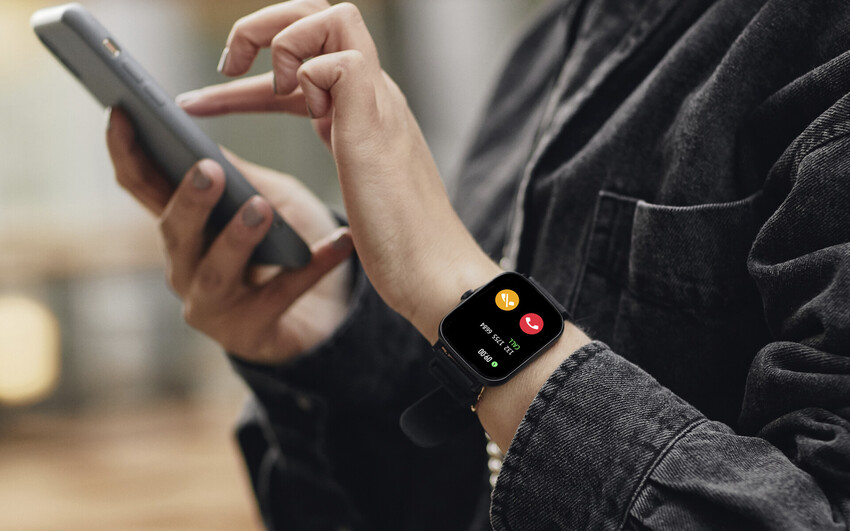
Your smartwatch buzzes with a stress alert. Your ring flags a sleep disturbance before you’ve noticed anything’s wrong. Fitness trackers have become personal health companions, changing how people keep tabs on their own bodies rather than waiting for an annual checkup to find out something’s off. If you’re new to the category and wondering what these devices actually do, this guide breaks down what a fitness tracker is, what it tracks, and how it works under the hood.
A short history of the step counter
Counting steps is a much older idea than the band on your wrist. Leonardo da Vinci sketched a mechanical device meant to gauge a soldier’s stride back in the 15th century. In 1780, Swiss watchmaker Abraham-Louis Perrelet built one of the first working pedometers, using a spring-suspended lever arm to tally steps and distance. Around the same time, Thomas Jefferson brought a French mechanical pedometer back to the United States and used it to measure distances in steps; some later nicknamed it the “Tomish meter” in his honor. A few decades later, watchmaker Abraham-Louis Breguet built a combined pedometer and stopwatch for measuring how far and how fast an army marched.
The real turning point came in the 1960s. Dr. Yoshiro Hatano, a Tokyo-based researcher, grew concerned about rising obesity in Japan and worked with an engineering colleague to design a wearable pedometer meant to fight it. They called the result “manpo-kei,” or “10,000-step meter,” launched around the time of the 1964 Tokyo Olympics.
That’s where the idea of “10,000 steps a day” comes from, and it’s worth knowing the number was never based on physiology or research; it was chosen because it was catchy and easy to remember. Recent research backs that up: several large studies now show meaningful drops in mortality risk starting around 4,000 to 7,000 steps a day, with the benefit curve flattening out well before 10,000. That doesn’t make 10,000 a bad target, but it does mean a lower number is still a real win, not a failure.
The stakes behind that research are real. The World Health Organization reports that noncommunicable diseases, cardiovascular disease, diabetes, cancer, and chronic respiratory illness, kill more than 40 million people every year. Regular physical activity is one of the most effective, most accessible tools against that number, and it’s also tied to sharper focus and fewer symptoms of depression and anxiety.
The device caught on immediately. “Manpo-kei” pedometers sold quickly across Japan, riding the same cultural moment as the Tokyo Olympics, and the habit of counting steps spread from there to the rest of the world well before anyone had a microchip to help.
The jump from that mechanical lever arm to today’s tracker happened gradually: digital pedometers in the 1990s replaced the spring with a simple motion switch, then MEMS accelerometers, the same tiny chips now in every smartphone, took over in the 2000s and made continuous, multi-axis motion sensing cheap enough to put in a wristband. Everything described below grew out of that one shift.
What a fitness tracker actually does
At its core, a fitness tracker is a wearable device built to observe and record different aspects of your health and movement. Its job is to turn that raw data into insight you can act on. Here’s what most trackers do:
- Movement tracking: steps, distance, and calories burned, compiled throughout the day into a single overview of your physical activity.
- Heart rate monitoring: an optical sensor reads your pulse continuously, not just during workouts, so you get a fuller picture of your cardiovascular patterns.
- Sleep tracking: duration and sleep stages, so you can see where your rest habits need attention, not just how many hours you logged.
- Calorie counting: an estimate of energy burned based on your movement and heart rate data, useful context if you’re managing your weight.
- Goal setting: turning that activity and calorie data into targets you can actually work toward, with steady feedback along the way.
- Notifications: keeping your phone’s calls, texts, and app alerts on your wrist or finger so you stay connected without checking it constantly.
Inside a fitness tracker: the five layers
Fitness trackers work across five layers, each handling a different part of the job.
1. Sensing layer
This is where the raw data comes from. Motion sensors, heart rate monitors, and temperature detectors constantly observe your body, capturing every beat, step, and breath.
2. MAC layer
Just like any wireless network needs rules for who transmits when, this layer manages access to the tracker’s sensors and controls the timing and order of data transmissions.
3. Network layer
This is the bridge between your tracker and your phone or computer, handling the transfer of data to your fitness app or a cloud service. GPS lives here too, mapping your route and tracking your position.
4. Processing and storage layer
A small onboard computer turns raw sensor readings into numbers you can actually use, step counts, heart rate trends, sleep stages, and stores them until they sync.
5. Service layer
This is the interface you actually see: goals, stats, notifications, and any other service your tracker connects to. It’s what turns data into decisions.
Together, these layers form a pipeline: sensors capture, the MAC layer organizes, the network layer transmits, the processing layer analyzes, and the service layer presents it all in a way you can act on.
Key sensors compared
Here’s what’s actually inside the case, and how each sensor’s role has grown. Clinical validation studies now put several of these readings above 85% accuracy against medical-grade equipment, and more of that comparison happens directly on the device rather than in the cloud, which keeps raw biometric data local instead of constantly streaming it out.
| Sensor | What it tracks | How it works | What’s new in 2026 |
| Accelerometer & gyroscope | Steps, distance, motion patterns | Detects movement and changes in orientation | Feeds directly into automated coaching that flags overtraining |
| Optical heart rate (PPG) | Heart rate, heart rate variability | A green or red LED shines through the skin and reads how light reflects off blood vessels | Continuous readings now feed automated recovery scores |
| Blood oxygen (SpO2) | Oxygen saturation, breathing disturbances | Measures how differently oxygenated blood absorbs light | Basis for regulatory-cleared sleep apnea screening on several watches and rings |
| Skin temperature | Overnight temperature trends | A contact sensor tracks small shifts while you sleep | Used to flag possible illness or cycle-related changes |
| Bioimpedance | Body composition | Sends a mild, imperceptible electrical signal through tissue | Emerging basis for blood pressure trend estimates on newer rings |
| Galvanic skin response | Stress and emotional arousal | Measures how the skin’s electrical conductivity shifts under stress | Increasingly paired with HRV for a combined stress score |
Types of fitness trackers
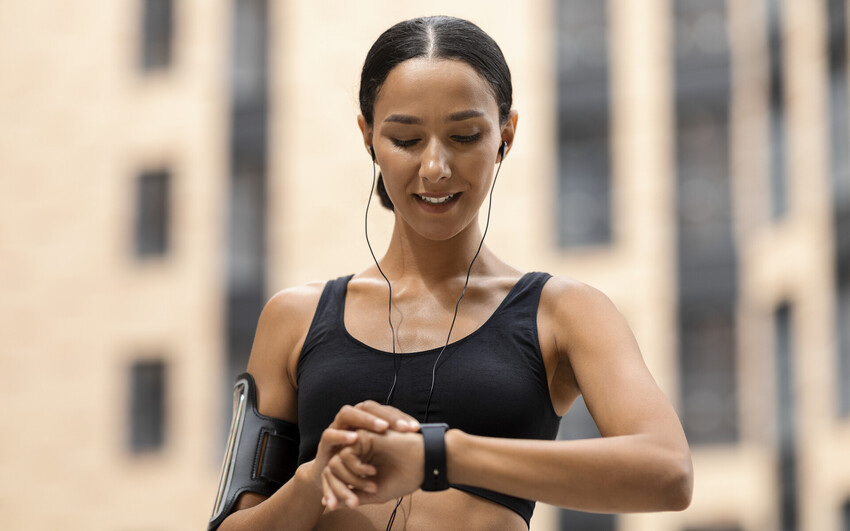
As you start comparing fitness trackers, you’ll find a handful of distinct categories, each suited to different priorities, and picking the right form factor matters more than picking the right brand.
Standard fitness trackers
The classic choice: functional, straightforward bands focused on steps, calories, and heart rate, usually at a lower price than a full smartwatch. A dependable pick if you want daily tracking without extra bulk, a crowded app, or features you’ll never open.
Smart rings
What used to be a niche, style-first option has become one of the biggest shifts in the category. Smart rings now account for roughly three-quarters of all fitness tracker revenue in the US, up sharply from less than half just a year earlier. Worn overnight without the bulk of a wristband, rings have become the preferred form factor for sleep tracking in particular, and the newest generation adds features like blood pressure trend monitoring alongside the usual heart rate and sleep data.
Unlikely fitness trackers
Fitness tracking has also spread into unexpected places: smart eyeglasses, running shoes, insoles, and even clothing with sensors woven into the fabric. These discreetly gather data as you go about your day, with no dedicated wearable required, and they’re especially useful for people who find a wristband or ring uncomfortable to wear all day.
Smart-tech trackers (smartwatches)
An all-in-one option that pairs health monitoring with full smartwatch features: GPS, notifications, music control, contactless payments, and more. These integrate into your digital life well beyond fitness, at the cost of a bulkier design and, usually, a shorter battery life than a dedicated band or ring.
Community-based trackers
Built for people motivated by competition and social accountability, these connect you to fitness communities or apps for setting challenges, comparing progress on shared leaderboards, and finding support from other users chasing similar goals.
The rise of AI health coaching
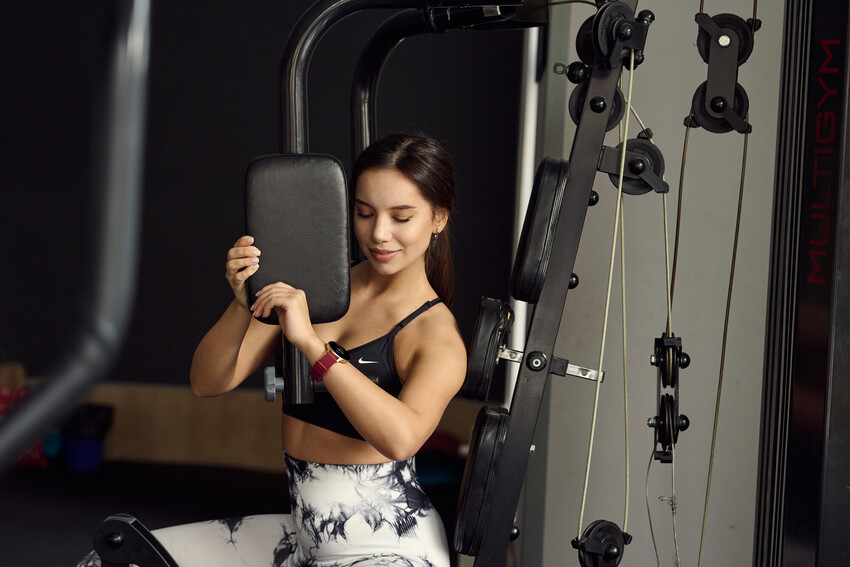
The biggest shift in fitness trackers over the past year isn’t a new sensor, it’s what happens to the data afterward. A growing number of wearable brands now pair their tracking hardware with an AI-powered coach that reads your activity, sleep, and recovery data and turns it into plain-language guidance: a training plan for next week, a note that your sleep has been slipping, or a suggestion to take an easier day after a hard workout. Ask it a specific question, like a request for a home strength routine focused on legs and core, and it can build one on the spot and adjust it as you go.
Some brands pair that AI layer with access to real people, on-demand consultations with licensed professionals alongside the automated coaching. Others keep it purely software-based, reading months of your own data to flag long-term trends a single day’s stats would never show. Either way, the fitness tracker’s job has expanded from counting steps to interpreting them.
This shift changes what’s worth comparing when you shop. A tracker’s sensor list used to be the whole story; now the coaching layer built on top of that data, and whether it runs locally on the device or leans on a cloud subscription, matters just as much for day-to-day usefulness.
How accurate are the numbers?
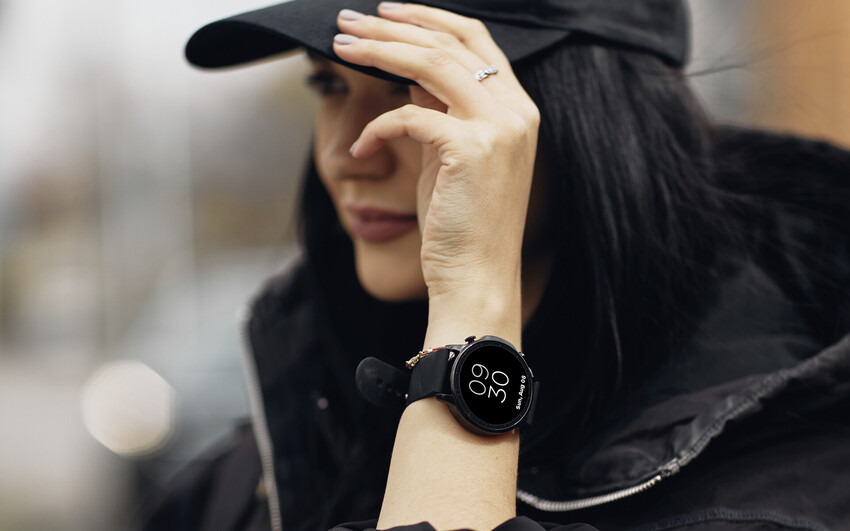
Worth knowing before you trust any single reading: no consumer fitness tracker is a medical device, and even FDA-cleared features are explicitly limited to screening, not diagnosis. Accuracy also varies by metric. Step counts and heart rate during steady activity tend to be close to clinical-grade equipment, while calorie burn estimates, sleep-stage detection, and stress scores are rougher, built on algorithms calibrated against population averages rather than your specific body.
That’s why two trackers worn on the same wrist can disagree, sometimes by a meaningful margin, and why the real value of a fitness tracker is less about any single number and more about the trend it shows over weeks and months. A one-off reading matters far less than a pattern that holds for two weeks straight, and most tracker apps are built around exactly that: rolling averages and trend lines instead of a single daily verdict.

Why fitness trackers are invaluable for busy people
Finding time for health and fitness is hard when your schedule is already full. Here’s where a fitness tracker earns its place:
- Efficient time management: real-time data on steps, calories, and heart rate helps you make the most of the time you do have, so a short workout squeezed between meetings still counts for something measurable.
- Goal setting and motivation: trackers turn vague intentions into achievable targets, a daily step count or a calorie goal, then give you steady feedback to help you stick with it instead of losing track after a busy week.
- Customized routines: many trackers and their companion apps suggest workouts based on your goals and current fitness level, so you’re not stuck planning a routine from scratch after a long day.
- Data-driven progress: detailed tracking of weight, body composition, and activity over time makes it easier to see what’s actually working and adjust your routine or diet accordingly, rather than guessing.
- Whole-picture health: beyond activity, most trackers monitor sleep and stress, both essential to managing a demanding schedule without quietly burning out.
- Convenience: a tracker comfortable enough to forget you’re wearing gets used every day, and consistency, more than any single feature, is what actually drives results.
Choosing the right one for you
With the type of tracker you want narrowed down, a few practical factors decide which specific model is right for you:
- Compatibility: make sure it works smoothly with your phone’s operating system and syncs cleanly with its companion app, since a tracker that fights your phone gets abandoned fast.
- Battery life: some trackers run for a week or more between charges; others need daily charging, which matters most if you’re relying on it for overnight sleep tracking.
- Comfort and design: you’ll wear it daily, sometimes to bed, so fit and style should suit you and your routine, not just the spec sheet.
- Water resistance: essential if you swim, want to keep it on in the shower, or just don’t want to think about taking it off.
- Budget: trackers range from budget-friendly to premium, so decide up front which features are actually worth paying extra for.
- Features: prioritize the sensors and functions that match what you actually want to track, GPS, heart rate, sleep, or something more specialized, rather than the longest spec sheet.
- Data privacy: check how your health data is stored and whether it leaves your device at all, since sleep, heart rate, and stress data are more sensitive than a typical app’s data.
The bottom line
A fitness tracker won’t do the exercise for you, but it will show you, clearly and continuously, what’s actually happening in your body. Treat the numbers as trends to watch rather than verdicts to obey, and it becomes a genuinely useful tool rather than another source of pressure.
Whether you’re chasing a specific goal or just want a clearer picture of your health, the right one turns raw movement into information you can use, and the best model for you depends less on which one has the most sensors and more on which one you’ll actually keep wearing.
Explore CANYON’s smartband and smartwatch lineup for a fitness tracker built around accurate tracking and everyday comfort, and find more health and fitness tips on the CANYON blog.