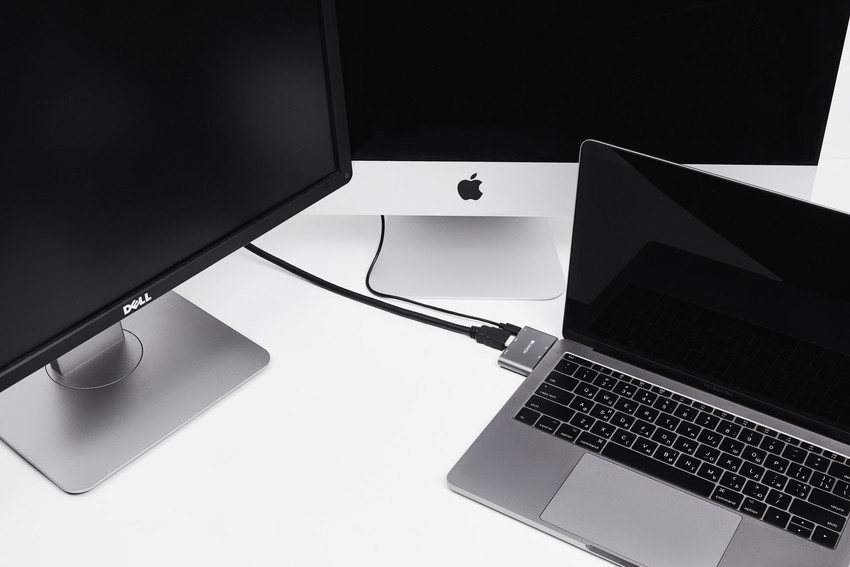
A second screen turns a laptop into something akin to a desktop. Spreadsheets stop falling off the edge, a video call is on one screen while your notes are on the other, and design work finally has room to spread out. The first question is fair: can I connect two monitors to my laptop and how? Usually yes, and in more ways than one. Some require nothing more than a cable. Others ask for a small piece of hardware that turns the machine into a workstation. This guide covers options from a simple direct connection to a dual monitor docking station for a full laptop, so you can mix and match your laptop and desktop.
Before you start: Check what your laptop can do
Setting up dual monitors with laptop hardware starts with knowing what the machine can push. Two things decide this: the video outputs you have (HDMI, DisplayPort, USB-C, Thunderbolt) and whether the graphics chip can drive two external displays at once. Most laptops today handle both. Slim ultrabooks and some budget models are limited to a single external display, no matter how many cables you connect. Your laptop’s specs page or GPU documentation lists the maximum number of external displays it supports. The check takes a minute and saves you an afternoon.
The cover varies more than people expect. Many mainstream Windows laptops manage two external monitors on top of their own display. Apple Silicon MacBooks Split by Chip: The basic M series often drives a single external display, while the Pro and Max versions run multiple. No dock or adapter adds a display that the graphics chip refuses to render, so read the line for maximum external displays before spending anything. If your laptop stops at one and you need two, this will point you towards a Thunderbolt machine or a dock that carries its own display driver, which some do.
Method 1: Built-in ports on the laptop
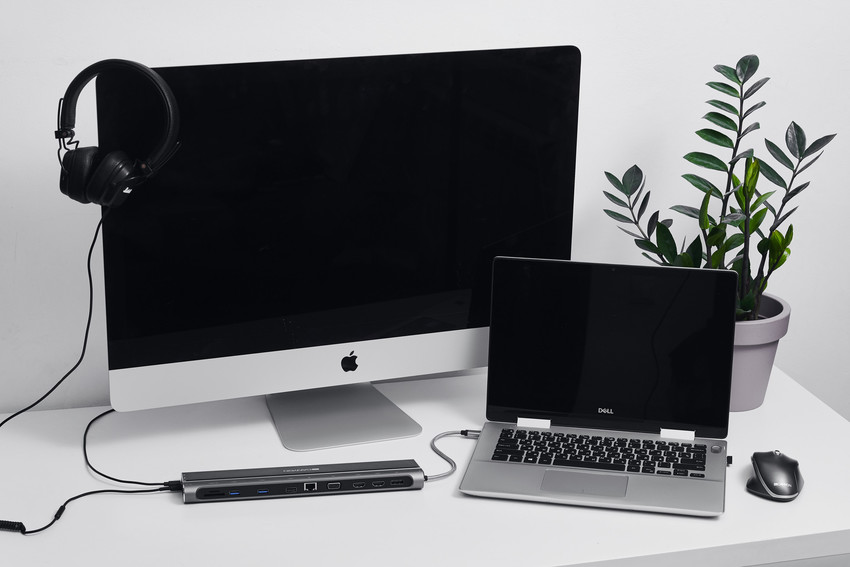
Two video outputs on the laptop and connect each monitor directly to the machine. Common pairings run an HDMI output along with a USB-C port with DisplayPort Alt mode, or two USB-C / Thunderbolt ports carrying video. A Thunderbolt 4 or USB4 port gives you more room to work: it drives a high-resolution display and returns power to the laptop via the same cable. Map each port to the correct cable, connect both displays, and you’re done.
Method 2: An adapter for older monitors
Older monitors tend to only carry an HDMI or VGA input, while newer laptops lean towards USB-C only. A small adapter bridges the gap: USB-C to HDMI, USB-C to VGA, or HDMI to DisplayPort. It’s the cheapest way to maintain a screen you already have. However, an adapter usually adds a display, so a second monitor still wants a free port somewhere or a hub. Whichever adapter you choose, make sure it handles your monitor’s resolution and refresh rate. A 4K display, for example, needs one rated for 4K at 60Hz to stay smooth.
Method 3: A USB-C hub or docking station
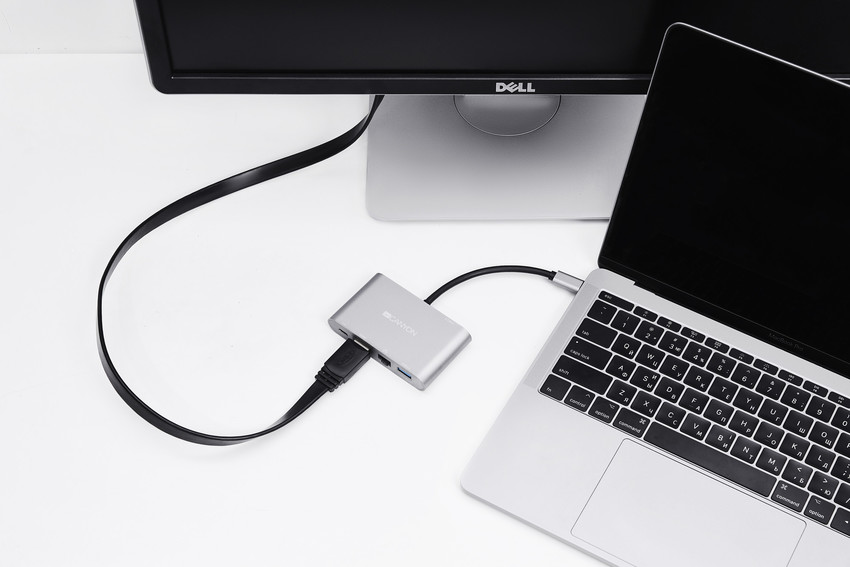
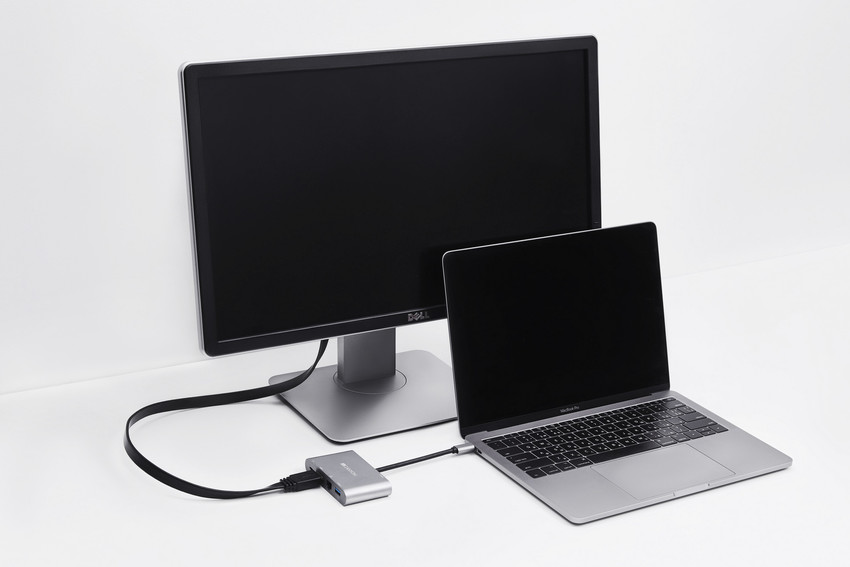
For most desktops, this is the neat answer. A USB-C hub or docking station plugs into a port on your laptop and gives you the connections you need at the end: two video outputs, a few USB Type-A ports for peripherals, Ethernet, an SD card reader, and pass-through charging to keep your laptop powered. One cable on the laptop, everything else parked on the dock. Go back to your desk, reconnect that single cable, and both monitors wake up.
Canyon USB-C hubs fit this workflow. The HDS-95ST 14-port USB-C docking station runs two HDMI outputs at 4K each and returns power to the laptop via the same link. The DS-12 13-port USB-C hub is another solid option, with two HDMI ports or HDMI plus VGA if one of your displays is older, and up to 100W of USB-C charging. Both connect to Windows – no drivers, no software, just connect and the monitors appear.
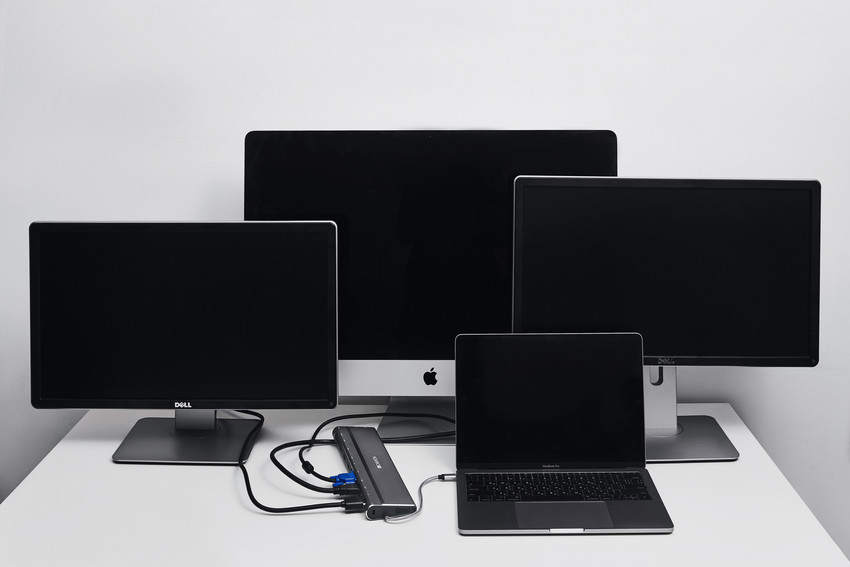
A note for Mac owners: macOS drives dual external displays via Thunderbolt by itself, but omits MST (Multi-Stream Transport), the trick that splits a USB-C port into two separate HDMI sources on a hub. On a MacBook, a standard USB-C hub tends to mirror the same image to both HDMI ports instead of displaying two different desktops. A Thunderbolt dock, or a Mac with multiple Thunderbolt ports, overcomes this. This also answers how to connect two monitors to a laptop with docking station equipment: choose a dock whose video outputs match your monitors and your platform, connect it, and organize the displays in your operating system.
Method 4: Daisy chaining with DisplayPort
Some monitors have a DisplayPort output and an input, allowing you to daisy-chain them—laptop to first monitor, first monitor to second—via DisplayPort cables. MST (Multi-Stream Transport) runs behind this and works on Windows machines whose DisplayPort or USB-C output supports it. From the laptop side, there’s only one cable left, but you need monitors that specify DisplayPort daisy-chaining on the spec sheet. Most office monitors don’t, so read the specs before committing.
How to connect 2 monitors to a laptop, step by step
With the hardware sorted, the software takes a couple of minutes. These are the two systems most people use.
Windows 10 or 11: Right-click on the desktop, open Display Settings, drag the numbered boxes to match where the monitors are physically located, then choose “Extend these displays.” Set the resolution and refresh rate for each screen individually.
macOS: Open System Settings, then Displays, use the Sort panel to place each display where it is on the desktop, and choose between Extend and Mirror. If a screen remains dark, disconnect and reconnect the cable and click “Detect screens”.
Quick troubleshooting
- No signal on a monitor? Reattach the cable at both ends, then try a different port or a cable that you know works.
- Does the resolution seem off? Open the display settings and set the monitor to its native resolution, usually the highest one in the list.
- Stuttering images? You may be driving an unsupported mode or sending too much data over a cable that can’t carry it. Switch to a certified high-speed HDMI or DisplayPort cable.
- Only one screen appears? Some laptops output on an external display. See the spec sheet.
Choosing the right configuration for you
Two video outputs on the laptop and no need for additional USB ports, and two direct cables win in price and simplicity. A USB-C-only laptop and the desire for a clean desktop point to a docking station, an input cable, and the rest connected forever. The monitors themselves wait in two locations and a dock on each desk plus a cable saves real minutes on every trip. If you’re using two monitors with a laptop for creative work or gaming, you want a connection that has the resolution and refresh rate you need, so look to Thunderbolt or DisplayPort over older HDMI or VGA.
What’s on the laptop and what’s on the back of the monitor takes care of most of that. Once you know both, choosing between a direct cable, an adapter and a base takes seconds. Order it once and a second screen goes from a research project to a click of a wire.